The Storage Bin Myth: More Containers Do Not Make More Space
The storage bin myth turns clutter into boxed clutter. Decide what deserves a place first, then choose containers that fit the space and its use.
The most common storage mistake is buying a bin before deciding what belongs in it. The storage bin myth costs you usable shelves, clear surfaces, and time spent shifting containers to reach what you need. A box can hide a decision; it cannot make one for you.
Start by asking what the item is for, whether you still use it, and where you would look for it. Only after those answers are clear does a container become useful. The goal is not to own more boxes. It is to make the things you keep easy to find, use, and put away.
What deserves a place?
An item deserves a place when it serves a current purpose, has a realistic future use, or matters enough to you that you are willing to care for it. That standard can include a spare set of sheets, a box of family photographs, or a tool used only for seasonal jobs. It does not require every object to earn its keep in the same way.
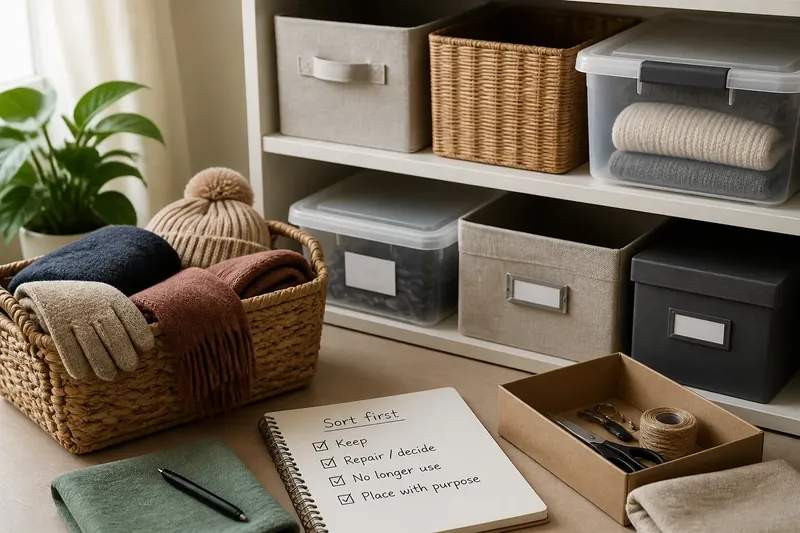
Begin with the contents, not the furniture. Gather one small group from a single area, such as scarves from the hall closet or craft supplies from a desk. Sort them by what they do. Keep the items you use, the ones you have a clear plan to use, and the ones you intentionally choose to preserve. Separate items that need repair or a decision so they do not quietly blend back into the everyday pile.
Be wary of vague plans. “Maybe someday” is not the same as a specific use. A spare curtain rod might have a clear role if you know which room needs it; an unidentified collection of brackets may simply be taking up space. When an item has no sensible destination or purpose, a container only postpones the choice.
Why do extra bins fail?
Extra bins fail when they increase the number of places an item can disappear without reducing the number of items. They can also turn open shelf space into a stack that blocks access. If you have to remove three boxes to reach the one you want, the arrangement is storing objects but not serving the routine.
Containers can also encourage category creep. A small box of cables becomes a large box of cables because space remains; an empty tote invites unrelated odds and ends. The boundary that should help you notice excess instead absorbs it. A useful container has a clear job and a limit you can see.
Imagine you find an overfilled shelf of winter accessories and consider buying another tote. Instead, you sort out the scarves and gloves that fit, set aside a pair needing a button repair, and identify a bag of items you no longer use. You then place the remaining accessories in one accessible basket near the coats. The expected result is a shelf that is easier to use, with fewer objects competing for the same spot—not merely a fuller collection of containers.
Which container should I choose?
Choose a container after you know what it will hold, how often you need the contents, and where it will sit. A shallow, open basket can suit frequently used hats or cleaning cloths. A lidded box can keep occasional-use items together when they belong on a higher shelf. A clear container can help identify its contents, while an opaque one may be better where light or appearance matters.
Match the container to the storage location rather than shopping for a general-purpose solution. Measure the shelf or drawer, including the space needed to lift a lid or pull the container out. Check the weight of the contents and whether the handle feels comfortable to use. If the box only fits when wedged in, or the lid makes access awkward, it is the wrong choice even if it looks tidy.
Reuse what you already have before buying. A sturdy shoebox may organize stationery on a shelf; a clean basket may corral items used by the front door. Avoid containers that are damaged, difficult to clean, or unsuitable for the contents. For anything with special storage requirements, follow its label or the maker’s directions.
How should I label and arrange bins?
Give each container one understandable category, then place it where that category is used or returned. “Batteries and small flashlights” is more useful than “miscellaneous.” If a category is too broad to make the contents easy to locate, divide it by function rather than by arbitrary container size.
Labels should describe what is actually inside, not what you hope to store later. A simple paper label or removable tape is enough. For a shared household, use words everyone recognizes, and keep the label visible when the bin is in its normal position. A label on the back of a stack does little good.
Arrange everyday items where they can be reached without moving rarely used ones. Put heavier containers on lower shelves and keep walkways clear. For storage that changes with the season, reserve a defined area and return items to it after use. The arrangement should make the next action obvious: take the item, use it, then return it.
What if a bin is already full?
Do not treat a full bin as proof that you need a larger one. First check whether its contents still belong together and whether each item has a current purpose. Remove duplicates you do not need, items that are broken beyond a realistic repair, and things that ended up there by accident. Then decide whether the remaining category genuinely needs more room or whether its location is inconvenient.
If you keep more than the space can comfortably hold, set a boundary that reflects the space you have. For example, the container may hold the seasonal decorations you choose to display or the craft materials that fit on one shelf. When new items arrive, make room by reconsidering existing ones instead of automatically adding another box.
Some belongings deserve storage even when they are used rarely. Important documents, keepsakes, and equipment for a specific task may need a protected place. Make that choice deliberately, and consider whether the container protects the contents as well as organizing them. A box is not useful if it makes a valued item hard to access or leaves it exposed to conditions it cannot tolerate.
How do I stop clutter returning?
Make putting things away part of the original storage decision. If a container is hard to reach, has an awkward lid, or is shared by unrelated items, people are likely to set things down nearby instead. Choose a home that matches the way the item is used, and make returning it simpler than leaving it out.
When an area starts to overflow, review the contents before shopping. Look for objects that have lost their purpose, items stored in the wrong place, and categories that have become too vague. If the bin itself is damaged or poorly suited, replace it with a better fit only after the contents have earned their place.
The storage bin myth is easy to spot once you ask whether each container makes a routine clearer. Keep the containers that help you reach and return useful things; let go of the ones that merely conceal indecision. Space begins with choosing what belongs, then giving those belongings a sensible home.